
Springs Sized Correctly for Safe Operation
Broken Torsion & Extension Spring Replacement in Rome for doors that drop suddenly, lift unevenly, or stop working after loud snapping sounds
A fractured torsion spring produces a sharp metallic crack as coiled steel releases tension instantly, leaving garage doors too heavy to lift manually and inoperable through automatic opener systems. Extension springs that snap while under load can whip across garage interiors with dangerous force, striking vehicles, stored items, or anyone standing nearby during the failure event. LCG Doors LLC replaces broken springs throughout Northwest Georgia using cycle-rated components matched to door weight specifications, restoring balanced lifting force that allows smooth operation without excessive strain on cables, pulleys, or opener motors.
Spring replacement requires complete tension release through controlled methods before removing fractured coils from torsion bars or unhooking broken extension springs from track brackets. New torsion springs are wound to precise tension specifications using calibrated winding bars inserted into cone end holes, with quarter-turn counts calculated according to door height and spring diameter. Extension springs receive proper cable threading through pulley systems and safety cable installation that prevents spring sections from becoming projectiles if future fractures occur during operation.
Stop operating your garage door immediately if you hear cracking sounds or notice the door hanging at an angle, and schedule professional spring replacement to prevent further damage.
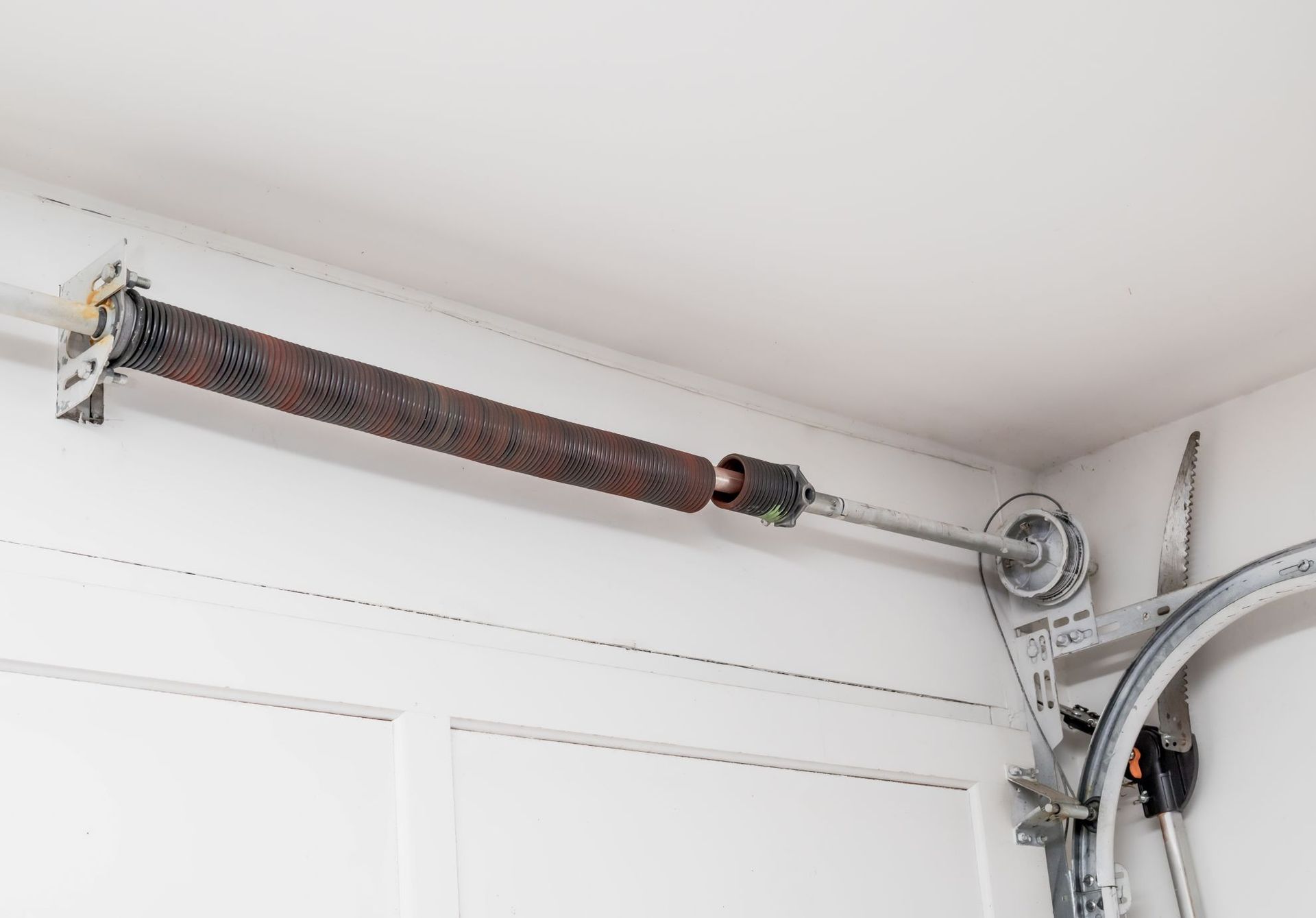
Why Spring Replacement Requires Correct Sizing
Torsion springs are manufactured with specific wire diameters, inside diameters, and length dimensions that determine lifting capacity and cycle life ratings, typically ranging from 10,000 to 30,000 opening cycles depending on spring quality. Undersized springs wear prematurely because they operate near maximum stress capacity during every cycle, while oversized springs create excessive lifting force that causes doors to rise too quickly and slam into open stops. Seasonal temperature fluctuations in Northwest Georgia cause metal contraction during cold periods and expansion during heat, stressing coils through repeated dimensional changes that gradually weaken steel over years of operation.
After spring replacement, your garage door lifts evenly across its width without tilting or binding in the tracks, stays in place when manually positioned at mid-height rather than dropping or rising on its own, and operates smoothly through opener cycles without jerky starts or mid-travel hesitation. Cable tension equalizes on both sides of the door, preventing uneven wear patterns that occur when imbalanced springs overload one cable assembly. Opener motors draw normal current levels instead of overheating from excessive resistance caused by improperly tensioned or incorrectly sized springs.
Inspection during spring replacement includes evaluating cable condition for fraying, checking pulley wheels for wear grooves, examining mounting brackets for stress cracks, and verifying that bottom bracket bolts remain securely fastened under spring load forces.
Spring Replacement Questions
Homeowners dealing with spring failures often ask about safety risks, replacement costs, and whether springs can be repaired rather than fully replaced.
What makes torsion spring replacement dangerous for homeowners attempting DIY repairs?
Springs store several hundred pounds of force in tensioned coils, and improper winding bar technique or inadequate securing methods can cause sudden release that spins winding bars violently, resulting in severe hand injuries, facial trauma, or bone fractures.
How long do properly installed garage door springs typically last before needing replacement?
Standard cycle-rated springs last seven to nine years with average daily use in Rome, while high-cycle springs extend lifespan to twelve to fifteen years depending on operation frequency and exposure to temperature extremes that accelerate metal fatigue.
Why do both torsion springs need replacement even if only one breaks?
Springs installed simultaneously experience identical cycle counts and wear patterns, so the remaining intact spring is near failure and will likely break within weeks or months, requiring a second service call and additional labor costs.
What warning signs indicate springs are wearing out before complete failure occurs?
Visible gaps between coils where tension has stretched steel, doors that require manual assistance to lift fully open, and openers that strain or stop mid-cycle due to insufficient spring support all signal imminent spring failure.
Can extension springs be upgraded to torsion spring systems during replacement?
Yes, converting from extension to torsion springs eliminates side-mounted hardware, frees ceiling space for storage, and improves balance control, though the conversion requires adding a torsion bar assembly and modifying existing track configurations.
LCG Doors LLC provides professional spring replacement with correct tension calibration and cycle-rated components for long-term reliability. Contact us immediately if your garage door shows signs of spring failure or becomes inoperable after sudden mechanical sounds.