
Garage door cable repair in Rome for broken, frayed, or misaligned cables that prevent safe door operation
Garage door cable repair in Rome for broken, frayed, or misaligned cables that prevent safe door operation
The cables on a garage door are what translate spring tension into controlled door movement—when they fail, the door either drops under its own weight or becomes stuck in place with the spring tension still loaded. Lcg Doors performs garage door cable repair in Rome for doors where broken, frayed, or improperly aligned cables are creating unsafe operating conditions or causing the door to move unevenly. Because cables work as a matched pair, a failure on one side puts the surviving cable under asymmetric load that can accelerate its failure or cause the door to tilt and jam in the track.
The repair process starts with a full cable and drum system inspection rather than addressing only the visible failure. A cable that has snapped is obvious, but the drum it was wound around, the anchor point where the cable attaches at the bottom bracket, and the condition of the cable on the opposite side all need to be checked before replacement hardware is installed. Cable alignment and adjustment addresses the less visible problem of cables that are still intact but have developed uneven tension—one side lifting slightly before the other—which shows up as a door that travels at an angle rather than rising horizontally.
Arrange an inspection to assess the full cable and drum system before deciding on the scope of the repair..
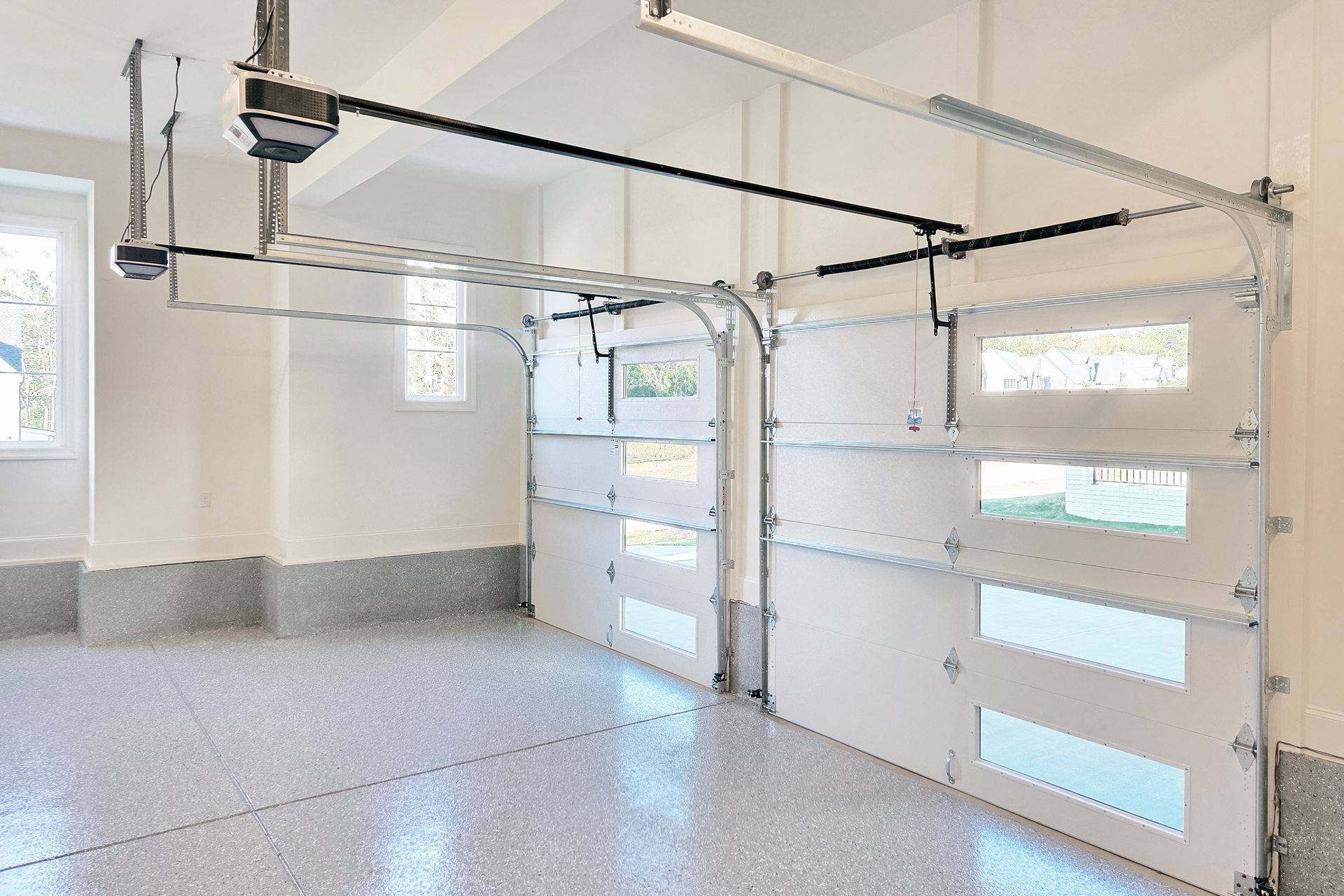
What Garage Door Cable Repair Actually Accomplishes
Broken cable replacement involves removing the failed cable, inspecting the drum groove for wear or damage that may have contributed to the failure, reseating the new cable correctly in the drum groove, and tensioning it to match the spring system's output. The drum groove matters specifically because a cable that runs in a worn or damaged groove will fray from repeated contact with the groove edge rather than from overload, which means a replacement cable installed in a damaged drum will fail again on the same wear pattern. Lcg Doors checks drum condition as a standard part of cable replacement for this reason.
After cable repair and correct tensioning, the door should rise horizontally—both bottom corners lifting at the same rate—and should hold position at any point in the travel range without one side dropping lower than the other. A door that previously moved at an angle, made a popping sound as cables snapped taut, or required extra force from the opener to complete a full cycle should operate noticeably more smoothly once the cable system is properly balanced and seated.
Frayed cable inspection is the proactive side of cable service—identifying cables that show visible strand separation, kinking, or corrosion at the anchor point before they break under load. A cable that is fraying at the bottom bracket anchor is a common failure location because that point experiences both tension and a slight bending load on every cycle. Catching that condition during inspection rather than after the cable fails means the repair can be completed on a planned basis rather than as an emergency..
Common Questions About Garage Door Cable Repair
Cable repair involves specific component relationships and sequencing decisions that affect both safety and longevity. These questions address what the work involves and what to watch for.
Why are both cables typically replaced even when only one has broken?
Cables on the same door age at the same rate under the same load conditions, so a cable that breaks after years of use usually indicates the surviving cable is near the end of the same service life. Replacing both during the same repair prevents a second cable failure shortly after the first one is addressed and ensures both sides carry equal tension from the same starting point.
How does cable drum condition affect how long a replacement cable lasts?
The drum groove guides the cable as it winds and unwinds with each door cycle. A groove that has developed a sharp edge or a deformation from the previous cable failure will cut into a new cable's outer strands on every operation. Inspecting and addressing drum condition before installing the replacement cable is what determines whether the repair holds or fails prematurely.
What does uneven cable tension look like during normal door operation?
The most visible sign is a door that rises or descends at an angle—one corner visibly higher than the other during travel. That angular movement puts lateral load on the rollers and track at the lower corner, which accelerates wear at that location and can eventually push the door off track if the tension imbalance is not corrected.
Where do cables most often show early wear or fraying?
The bottom bracket anchor point is the most common location for early cable deterioration because the cable makes a slight directional change at that attachment, creating a bending stress that repeats on every cycle. In Rome properties where bottom brackets sit close to the floor and are exposed to moisture from the apron, corrosion at that anchor point is an additional factor that can weaken the cable end before the rest of the cable shows any wear.
How is correct cable seating in the drum confirmed after replacement?
After the cable is wound onto the drum, the technician cycles the door through its full travel range and visually checks that the cable wraps in consistent, tight layers without overlapping or bridging across grooves. An improperly seated cable will show gaps between wraps or jump a groove during travel, which creates uneven tension and accelerates both cable and drum wear.
Lcg Doors handles garage door cable repair throughout Rome, including broken cable replacement, drum inspection, and tension adjustment for doors that are lifting unevenly or showing early signs of cable wear. Reach Lcg Doors to schedule a cable system inspection for your property.