
Remote Access Problems Traced to Their Source
Garage door remote repair in Rome for remotes that won't respond, operate inconsistently, or have lost their programming
What changes after a remote repair is completed: the door responds on the first press from a normal operating distance, without multiple attempts or repositioning to find a working angle. LCG Doors provides garage door remote repair in Rome to work backward from that result—identifying whether the problem is a depleted battery, a signal obstruction, a lost programming link, or a remote unit that has failed internally. Homeowners often replace batteries first, which is the right starting point, but remotes that still underperform after a battery swap have a different underlying cause that needs to be isolated before the fix is chosen.
Troubleshooting a non-responsive remote involves checking signal transmission at varying distances from the opener receiver, inspecting the battery contacts for corrosion that prevents proper voltage delivery even with a fresh battery, and determining whether the remote's frequency pairing with the opener is still intact. Reprogramming reconnects the remote to the opener's learn circuit, which is the appropriate step when the pairing has been lost—often after a power outage, an opener board reset, or when another remote was programmed and inadvertently cleared the memory. When a remote has failed internally, a compatible replacement is configured rather than attempting to rebuild the original unit.
Set up a remote diagnostic visit with LCG Doors to identify the specific point of failure rather than cycling through parts that may not address the actual problem.
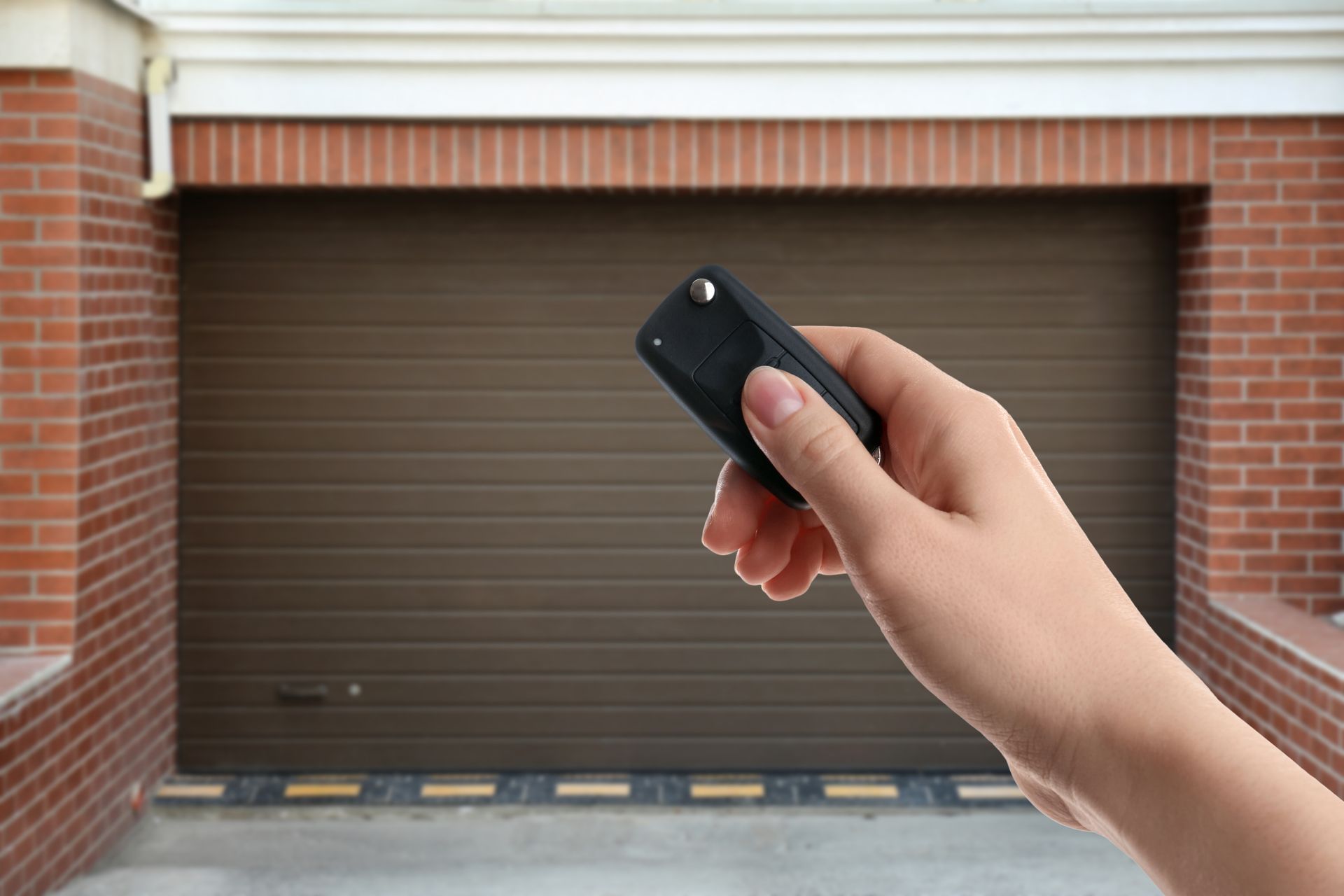
Why Remote Signal Problems Happen and How to Stop Them
Garage door remotes operate on radio frequency signals, typically in the 315 MHz or 390 MHz range depending on the opener manufacturer and model year. When the remote transmits and the opener fails to respond, the issue falls into one of three categories: the signal isn't leaving the remote with enough strength, the opener's receive antenna isn't picking it up, or the two units are no longer paired on the same code. Distinguishing between those three possibilities is what determines whether the solution is reprogramming, antenna adjustment, or remote replacement.
After a successful remote repair or reprogramming, the door operates consistently from inside the vehicle at the driveway approach distance without requiring the remote to be pointed directly at the opener unit. If reliable operation only returns when the remote is held very close to the opener, the antenna wire on the opener receiver may be bundled or routed in a way that shortens its effective range—a separate adjustment from the remote itself.
Replacement remote configuration involves more than matching a frequency band. The replacement unit must be compatible with the opener's rolling code or fixed code protocol, and some manufacturers require the learn button sequence to be completed within a specific time window. Remotes from different manufacturers are sometimes cross-compatible when protocol and frequency align, but confirming compatibility before purchase prevents a second return visit to swap out an incompatible unit.
Answers About How Remote Repair Gets Done
The following questions address how remote troubleshooting and reprogramming actually work, which helps homeowners understand what to expect during a service visit.
How does reprogramming a remote differ from simply replacing the battery?
A battery swap restores power to the transmitter, but reprogramming re-establishes the communication code between the remote and the opener's logic board. These are separate issues: a fully charged remote that lost its pairing will transmit at full strength and still produce no response from the opener until the programming sequence is completed.
What causes a remote to lose its programming without any obvious trigger?
Opener logic boards have limited memory for stored remote codes, and programming a new remote sometimes overwrites an existing one when the memory is at capacity. Power surges and extended power outages can also clear the learn memory on certain opener models, which means all previously programmed remotes need to be repaired after power is restored.
How do you determine whether the remote or the opener receiver is the source of the problem?
Testing a known-working remote or a keypad against the opener while the suspect remote is also tested creates a comparison. If the opener responds to one transmitter and not the other, the problem is in the non-responding remote. If neither transmitter works, the opener's antenna circuit or logic board becomes the next diagnostic focus.
What should you check before assuming a remote has failed permanently?
Battery contact corrosion is a common cause of failure in remotes stored in vehicles, where temperature variation accelerates oxidation on the contact points. Cleaning the contacts with a pencil eraser and installing a fresh battery resolves a meaningful percentage of cases that initially appear to be internal remote failures.
How is a replacement remote matched to an existing opener system?
The opener's manufacturer label provides the model number, which determines the frequency band and code protocol required. In Rome homes with older opener units installed during the 1990s or early 2000s, fixed-code systems were common, and replacement remotes for those systems differ from the rolling-code remotes used in current hardware.
LCG Doors also handles garage door remote repair in Calhoun, Cedartown, Cartersville, and Summerville. If your remote has stopped working or is producing inconsistent results, LCG Doors can run through the full signal and programming diagnostic to identify what's actually causing the problem.