
When Overhead Doors Stop Working Mid-Operation
Overhead door repair in Rome for doors that bind, fail to open, or show signs of mechanical wear
Lcg Doors handles overhead door repair in Rome for residential and commercial properties where mechanical failures interrupt daily operations. A door that reverses unexpectedly, moves unevenly along the track, or refuses to lift altogether points to worn or failed components in the lifting system. Left unaddressed, those failures tend to compound—a fraying cable puts added load on the springs, and a misaligned track accelerates roller wear on every cycle.
The repair process begins with overhead door troubleshooting to identify exactly which mechanical components are responsible for the failure. That diagnostic step determines whether the issue involves the springs and cables that carry the door's weight, the tracks and rollers that guide its movement, or the hardware connecting those systems. Skipping straight to part replacement without that evaluation often means the visible symptom gets addressed while the underlying cause continues stressing the repaired component.
Arrange an on-site evaluation to identify which components are contributing to your door's current performance issue..
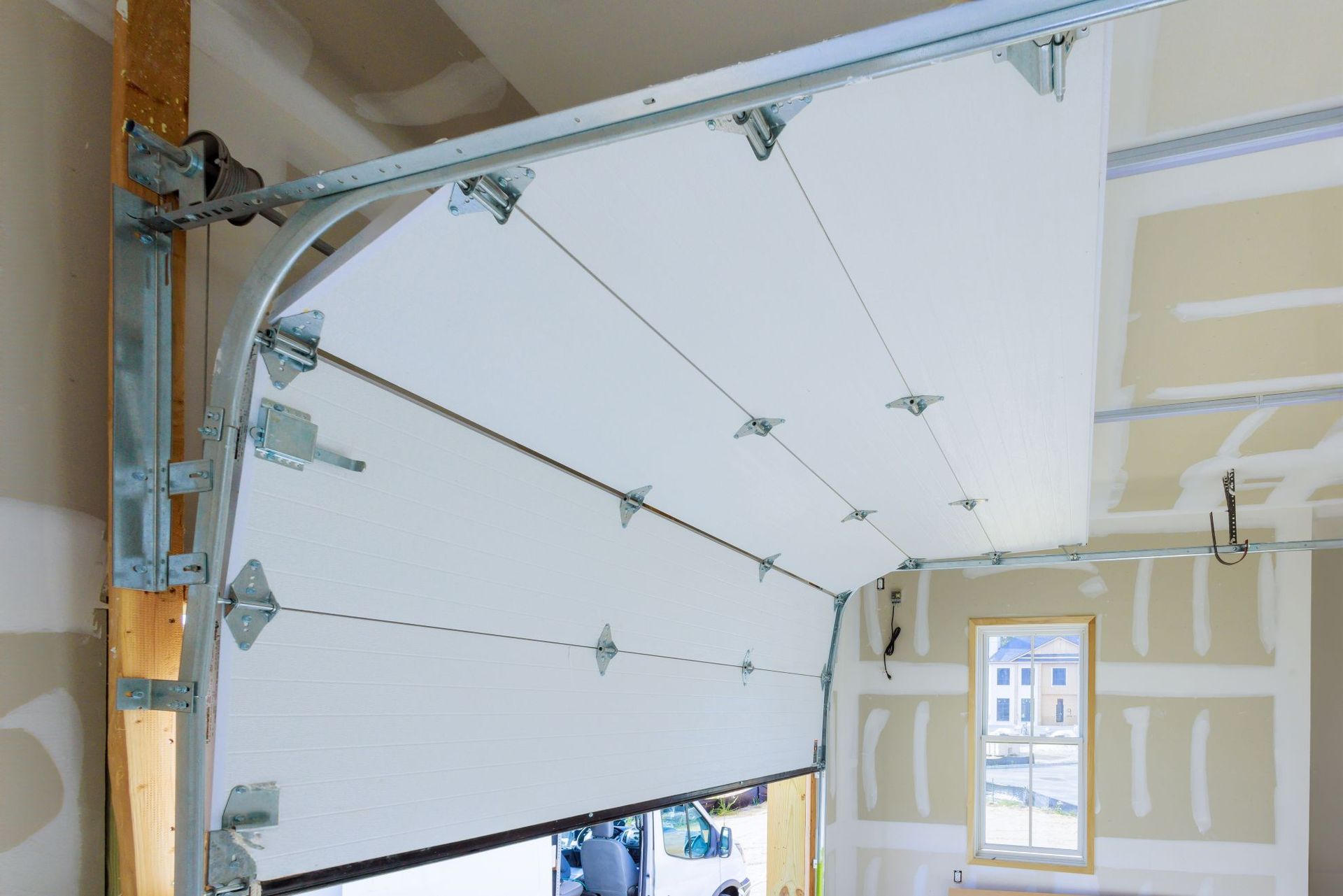
How Overhead Door Repair Addresses Mechanical System Failures
Spring and cable repairs address the components that do the actual work of lifting and controlling door weight. Torsion springs store and release mechanical energy on every cycle, and when a spring loses tension or breaks, the opener motor or any manual lift attempt bears the full weight of the door. Cable repairs focus on replacing damaged cables and checking the drum system—the cable drum is what converts spring torque into controlled lifting movement, so wear or misalignment there causes the uneven lifting that makes one side of the door drop lower than the other.
After spring and cable work is completed, a door that previously slammed shut or required significant force to move manually will travel smoothly and hold position partway open without drifting. Track and roller repairs produce a similarly noticeable change: the grinding or scraping noise that accompanies movement on a bent or debris-packed track disappears, and the door moves without resistance through its full range of travel. These are observable changes that confirm the mechanical system is balanced and properly engaged.
Commercial overhead door repair follows the same diagnostic approach but accounts for the heavier door assemblies and higher cycle frequency common in industrial and warehouse applications. Doors in those environments accumulate wear faster than residential units, and the components—particularly rollers and track hardware—are sized differently and require compatible replacement parts. Lcg Doors services commercial-compatible overhead doors alongside residential units, which means the same troubleshooting process applies regardless of door type or size..
What Property Owners Ask About Overhead Door Repair
These questions address how overhead door repair actually works—the process, the decisions involved, and what you can expect to observe once the work is finished.
What does overhead door troubleshooting actually check?
Troubleshooting involves cycling the door manually and under power to isolate whether the failure is in the lifting components, the track system, or the hardware connecting them. The sequence matters because symptoms like uneven travel or sudden reversal can originate in more than one system, and the correct repair depends on identifying the actual source.
How do you know when a spring needs replacement versus adjustment?
A spring that has lost tension but is still intact can sometimes be adjusted to restore proper counterbalance, but a spring that has broken or shows visible separation must be replaced. You can often tell the difference by checking whether the door lifts evenly and holds position at mid-height without assistance—if it doesn't, the spring system is out of balance.
What happens to cables when a spring breaks?
When a torsion spring breaks, it releases the tension that keeps cables properly seated in the drum grooves, which causes the cables to go slack and often slip off the drum entirely. Replacing the spring without reinspecting and repositioning the cables leaves the door at risk of dropping unevenly on the next operation cycle.
Why do rollers wear out faster on some doors than others?
Rollers degrade faster when tracks are even slightly misaligned, because the roller is then running against the track edge rather than rolling freely through the center of the channel. In Rome's commercial properties and older residential construction where tracks may have shifted from settling or impact, this kind of accelerated roller wear is a common finding during inspection.
What should a correctly repaired overhead door do that a failing one doesn't? A properly functioning overhead door opens and closes without audible grinding, holds position at any point in its travel without drifting, and reverses cleanly when the safety system triggers. If the door hesitates, makes noise through part of the travel, or continues moving after the opener stops, one or more components still need attention.
What should a correctly repaired overhead door do that a failing one doesn't? A properly functioning overhead door opens and closes without audible grinding, holds position at any point in its travel without drifting, and reverses cleanly when the safety system triggers. If the door hesitates, makes noise through part of the travel, or continues moving after the opener stops, one or more components still need attention.
Lcg Doors provides overhead door repair for properties throughout Rome where mechanical system failures are preventing normal door operation. Contact Lcg Doors to schedule an inspection and get a clear account of what the repair involves before any work begins.