
When the Motor Runs but the Door Doesn't Move
Garage door motor repair in Rome for openers that stall, cycle inconsistently, or have stopped driving the door
Rome's residential neighborhoods include a significant share of attached garages built as part of home construction in the 1980s and 1990s, a period when chain-drive and screw-drive openers were the dominant installation. Motors from that era are still in service in many of those homes, and they develop specific failure patterns as the drive components and internal capacitors age. LCG Doors handles garage door motor repair in Rome for homeowners whose openers are stalling mid-cycle, running audibly without moving the door, or producing intermittent operation that can't be predicted from one use to the next. Those symptoms each point to different component conditions inside the motor assembly, and correctly identifying which one is present determines whether the repair involves component-level work or full motor replacement.
Motor troubleshooting begins with load testing—running the opener under both open and close cycles while monitoring how the motor responds under the door's actual weight. A motor that stalls specifically during the close cycle, for example, often has a capacitor issue rather than a winding failure, because the capacitor is what provides starting torque. A motor that runs continuously without moving the door has likely lost its connection to the drive mechanism, which is a separate mechanical failure. Identifying the fault type before any parts are ordered prevents replacing a functional component when the actual failure is elsewhere in the assembly.
Request a motor diagnostic visit with LCG Doors to isolate the specific failure before committing to a repair or replacement path..
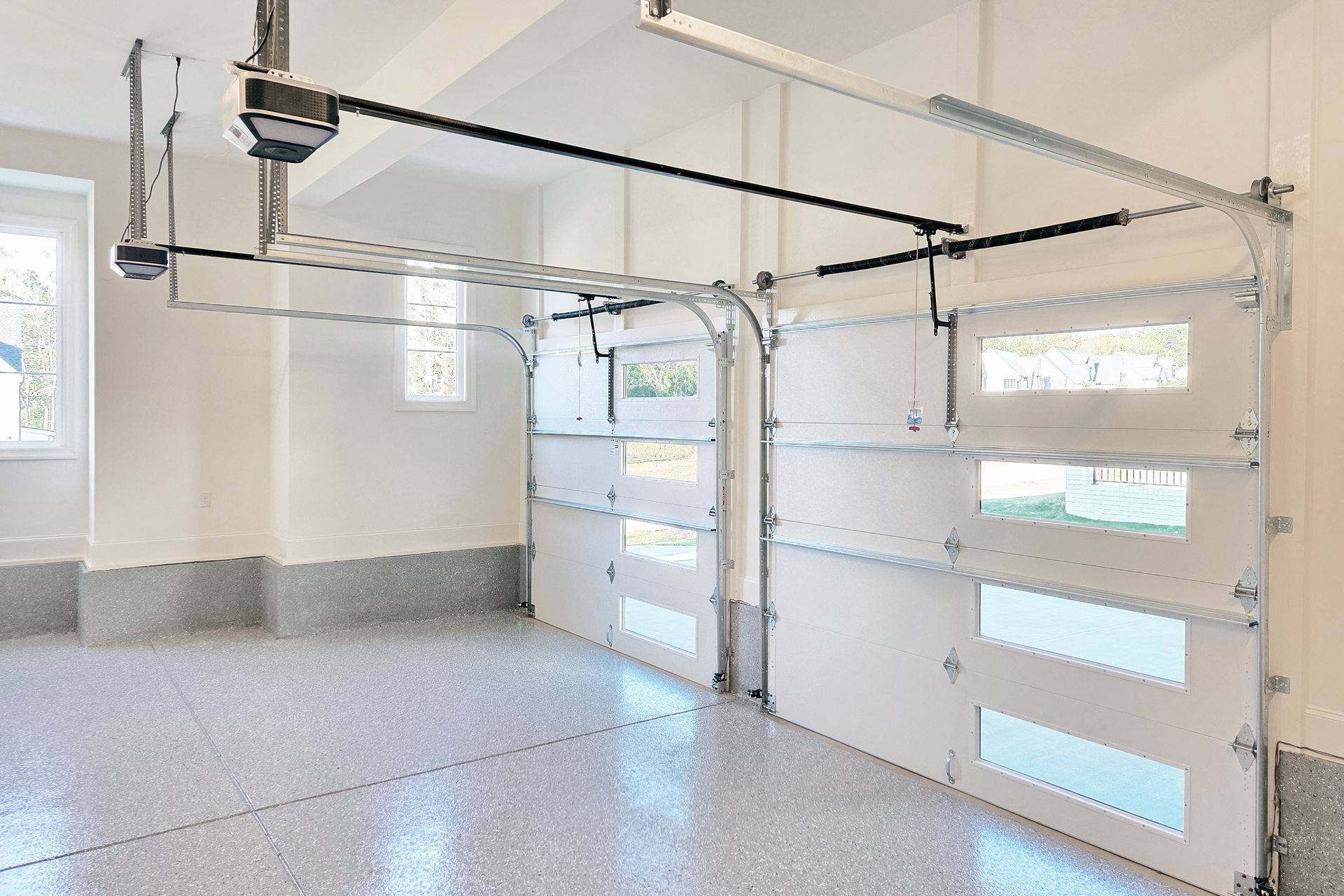
What Proper Motor Diagnosis Requires
A thorough motor repair assessment covers not just the motor unit itself but the logic board that controls its operation and the drive system it powers. Motors that exhibit intermittent operation—working correctly some days and failing on others—often have a logic board fault rather than a motor winding problem, because a failing board may send inconsistent power signals to the motor under certain voltage or temperature conditions. Distinguishing between a board issue and a motor issue requires testing the input voltage at the motor terminals separately from testing the motor's resistance on its windings.
After a motor repair is completed, the opener should run through a full open and close cycle without hesitation, speed variation, or audible strain. LCG Doors verifies operation under load rather than just confirming the motor turns, because a motor that runs freely without a drive load connected can appear functional while still failing when the door's actual weight is applied.
When motor repair is no longer a practical path—usually when the motor windings, logic board, and drive components have all reached the end of their service life simultaneously—replacement is the more cost-effective decision. Replacement involves selecting a motor unit compatible with the existing rail and drive configuration when possible, which avoids the cost of replacing hardware that is still functional..
Common Questions About Motor Repair Work
These questions address how motor diagnosis and repair are approached, including what the inspection covers and how decisions about repair versus replacement get made.
What does it mean when the opener motor runs but the door doesn't move?
This typically indicates the drive mechanism—chain, belt, screw, or carriage—has disconnected from the trolley or the drive gear inside the motor unit has stripped. The motor is producing output, but that output isn't reaching the door because the mechanical connection between them has failed.
How is intermittent motor operation diagnosed when the problem doesn't appear consistently?
Intermittent faults are best diagnosed by running the door through repeated cycles under load and monitoring voltage at the motor terminals throughout. A fault that only appears after several cycles often points to a thermal issue in the motor windings or a logic board that cuts power output as internal temperatures rise.
What motor components are typically repaired rather than replaced?
Starting capacitors are a common repair item because they fail independently of the motor windings and are straightforward to replace without disturbing the motor unit itself. Drive gears inside chain and screw drive openers are another component that can be replaced separately, which is a more cost-effective repair than a full motor swap when the motor windings are still within spec.
How does the age of the opener affect motor repair decisions in Rome homes?
Openers installed in the late 1980s and 1990s—common in Rome's established neighborhoods—often used proprietary logic board designs for which replacement boards are no longer manufactured. When the board is the primary failure point on a unit that old, replacement of the full opener is usually more practical than sourcing a compatible board through secondary markets.
What preparation helps the motor diagnostic go more efficiently?
Clearing the area around the opener unit so the drive mechanism is fully visible, and noting whether the failure occurs during opening, closing, or both, gives the technician useful starting information. Knowing whether the problem appeared suddenly or developed gradually over several weeks also helps narrow whether the fault is a discrete component failure or cumulative wear across multiple parts.
LCG Doors also performs garage door motor repair in Calhoun, Cedartown, Cartersville, and Summerville. If your opener is behaving unpredictably or has stopped moving the door entirely, LCG Doors can run a full motor and drive system assessment to identify what's failed and what the most practical repair path looks like.