
Springs That Stop Working Cost More Later
Garage door spring repair in Rome for doors that won't lift, move unevenly, or drop without warning
A snapped or worn torsion spring doesn't just make the door hard to open—it puts every other component under strain every time the system is forced to operate without proper counterbalance. LCG Doors provides garage door spring repair in Rome for homeowners dealing with doors that have stopped functioning, lift unevenly, or show signs the springs are approaching failure. The difference between a door that works and one that damages its opener or cables is almost always in the spring system.
The repair process begins with a full spring system inspection, checking both torsion and extension spring configurations for wear, corrosion, and load fatigue. Many older homes in Rome carry attached garages built with extension spring systems—a design that uses two separate springs along the horizontal tracks rather than a single torsion unit mounted above the door. Knowing which system is present determines how the replacement is sequenced, what hardware is compatible, and whether the cable assembly needs to be addressed at the same time. Once the damaged spring is replaced, a door balance assessment confirms the door lifts evenly and holds position mid-travel, which is the clearest indicator the spring tension is correctly calibrated.
Schedule a spring inspection with LCG Doors to identify what stage of wear your current system is at before a full failure forces an emergency repair.
How Spring Condition Affects the Whole Door System
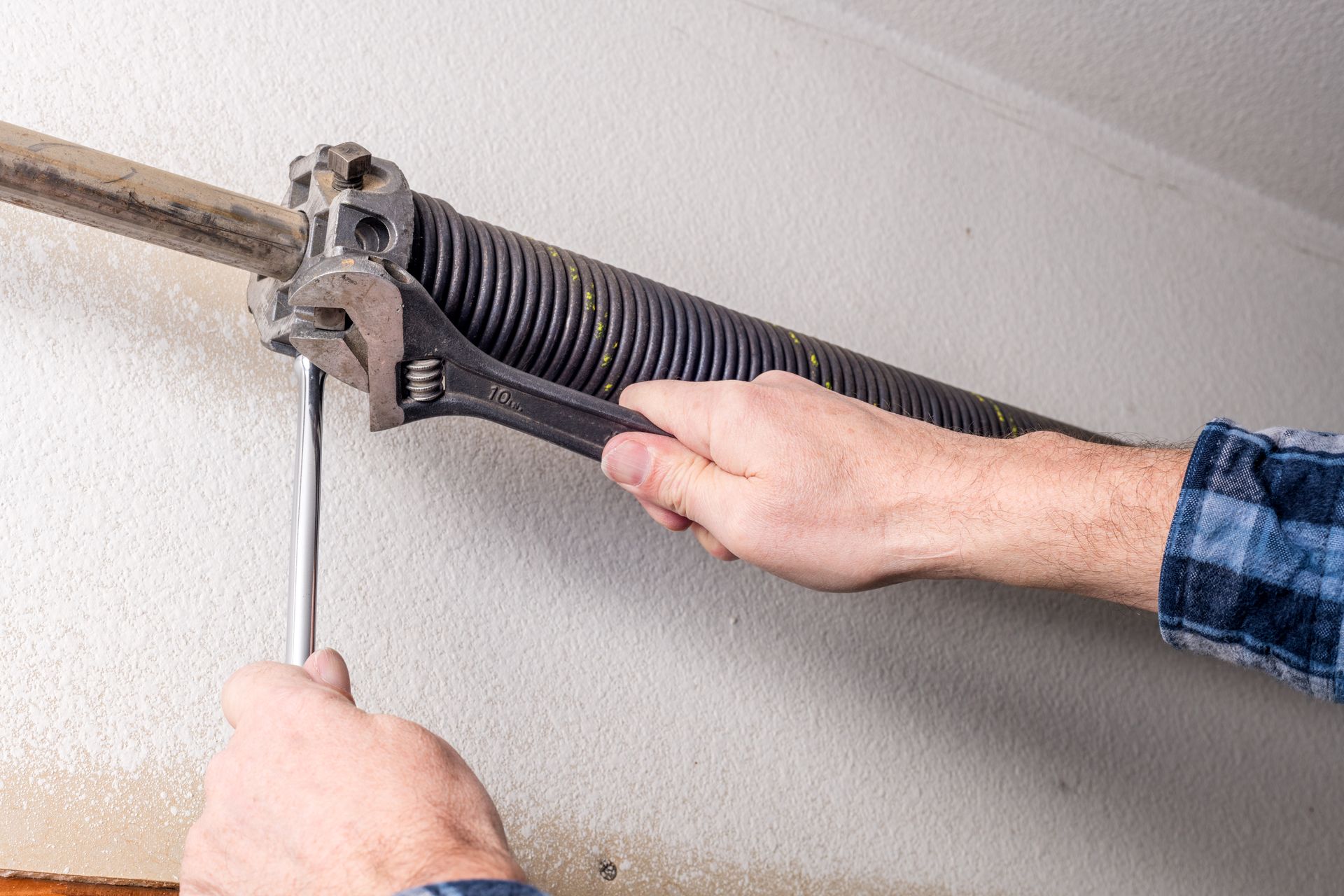
Garage door springs carry nearly the full weight of the door every time it moves. A torsion spring stores mechanical energy as it winds and releases that energy to counterbalance the door's weight during travel—when it's worn, the opener motor compensates by working harder, shortening its service life. During a repair visit, both the spring hardware and the winding cones are examined, because a corroded or cracked winding cone is a failure point that a spring swap alone won't fix.
After a completed spring replacement, the door should open in a single, controlled motion without the opener straining audibly, and it should hold position when manually stopped at mid-height. If the door drifts down when released at that point, the spring tension is not yet balanced correctly and needs further adjustment before the job is finished.
Torsion and extension spring systems require different tools, anchor hardware, and tension-setting procedures, so identifying the configuration before any parts are ordered prevents delays on the day of service. Doors with high headroom conversions or low-headroom brackets may require specialty spring lengths that differ from standard residential stock.
What Property Owners Ask About Spring Repair
These questions come up frequently during spring repair assessments, particularly in homes where the garage door system hasn't been serviced in several years.
What is the difference between a torsion spring and an extension spring, and how does it change the repair?
Torsion springs mount horizontally above the door opening and wind under torque, while extension springs run along the upper horizontal tracks and stretch under load. The repair method, parts, and safety procedures are different for each, so the first step at any visit is confirming which system your door uses before any work begins.
How do you know when a spring is failing before it breaks completely?
A door that requires noticeably more effort to lift manually, gaps that appear in the spring coil, or visible rust on the spring body are all indicators of approaching failure. You may also notice the opener laboring louder than usual, which happens when the spring is no longer providing adequate counterbalance.
Why does the door need a balance assessment after spring replacement?
Spring tension has to be calibrated to the specific weight of your door panel, and that weight varies based on material and insulation. A balance check—releasing the door manually at mid-travel and observing whether it holds, rises, or drops—confirms the tension is set correctly for your specific door.
What happens to the cables when a spring breaks?
On torsion systems, a broken spring often causes cables to unspool from the drum, leaving them coiled on the floor or tangled. Cables should be inspected as part of any spring replacement because a damaged cable on a newly tensioned spring creates a secondary failure point.
How are spring repairs handled differently in Rome's attached garage homes versus detached structures?
Attached garages, which are common throughout Rome's residential neighborhoods, typically have enclosed utility spaces with limited headroom clearance above the door, which affects how winding bars are positioned during torsion spring replacement. Detached garages often have more working room but may have older hardware that requires compatible replacement parts rather than current standard sizing.
LCG Doors also performs garage door spring repair in Calhoun, Cedartown, Cartersville, and Summerville. If your door has stopped lifting or is moving unevenly, contact LCG Doors to arrange an on-site spring assessment and get the correct spring system identified before parts are sourced.