
Panels That Break the Door's Structural Line
Garage door panel repair in Rome for cracked, dented, or deteriorated panels that affect appearance and door function
Cracked or severely dented panels do more than affect how a garage door looks—they compromise the door's ability to hold its shape as it moves along the track, which can put added stress on hinges and rollers over time. Lcg Doors performs garage door panel repair in Rome for homeowners and property owners dealing with cosmetic damage, structural panel failure, or surface deterioration that has progressed past surface-level wear. The question at the start of every panel job is whether the damage warrants repair or full panel replacement, and that determination drives everything that follows.
For minor dents, the assessment focuses on whether the panel's inner structure is still intact—a dent that has only deformed the outer skin without cracking the underlying material or shifting the hinge points is a candidate for cosmetic repair. A panel that is cracked through, badly buckled, or shows signs of moisture intrusion along its seams has lost structural integrity and needs to be replaced. Panel matching and installation involves sourcing a replacement section that fits the existing door's dimensions and profile, which requires identifying the manufacturer and series before ordering to avoid visible mismatches in panel profile and texture.
Request an inspection to determine whether your damaged panel can be repaired in place or requires a matched replacement section..
What Proper Panel Repair and Replacement Requires
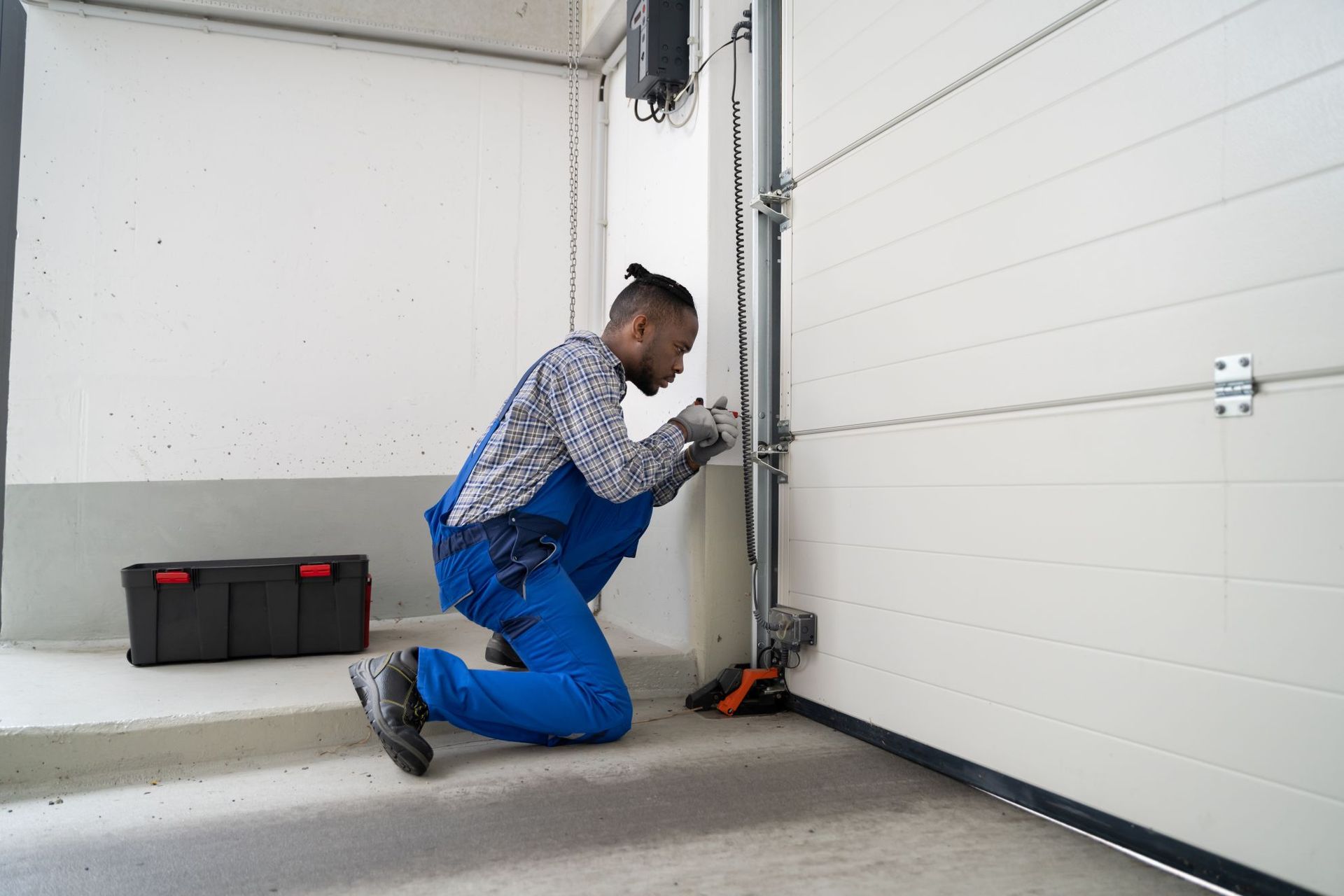
Panel replacement is not simply swapping one section for another. The replacement panel must align precisely with the adjacent sections so that the hinge points land correctly and the door flexes without binding as it travels through the curved overhead track. A panel installed even slightly out of alignment will cause the door to bind at the same point in every cycle, putting repeated stress on the rollers and track hardware at that location. Lcg Doors checks hinge positioning and panel alignment as part of every replacement installation rather than treating it as a separate step.
Once panel work is complete, the door should move through its full range of travel without hesitation at the section where the repair was made. Visually, the replaced or repaired panel should follow the same profile line as the surrounding sections—no visible gaps at the horizontal seams, no raised edges where the hinge brackets mount. Weather damage repair addresses a specific failure pattern where prolonged moisture exposure causes panel surfaces to delaminate or corrode along the bottom sections, which are most exposed to water pooling at the floor line.
Panel compatibility is one of the more common complicating factors in this work, particularly on doors from manufacturers that have discontinued older product lines. When a direct match is unavailable, the practical decision involves weighing whether a close-match panel is acceptable for that location on the door, or whether the scope should expand to replacing multiple panels for visual consistency. That decision depends on where the damaged panel sits, how visible it is, and how closely available replacement sections match the existing door's texture and finish..
Questions About How Panel Repair Work Is Done
Panel repair involves specific decisions about structural condition, material matching, and installation sequencing that affect the final result. These questions address how that process works.
How is a dented panel assessed to determine whether it can be repaired?
The assessment checks whether the inner steel structure of the panel is still flat and the hinge mounting points are undamaged. A panel whose outer skin is deformed but whose inner structure is intact may respond to repair; one where the hinge mounting tabs have bent or the panel has cracked along a seam needs replacement to maintain proper function.
What makes panel matching difficult on older garage doors?
Manufacturers periodically update panel profiles, embossing patterns, and steel gauges, which means a panel from the same brand installed five or more years apart may have a visibly different texture. Identifying the original manufacturing series—not just the brand—is the first step toward finding a compatible replacement.
Why do bottom panels deteriorate faster than upper sections?
Bottom panels sit closest to the floor line where water pools during heavy rain and where vehicles tracking moisture into the garage bring it into direct contact with the steel. In Rome's older residential construction where concrete aprons may not drain away from the door effectively, this pooling pattern accelerates surface corrosion and seal failure at the bottom panel seam.
What happens to hinges when a panel is replaced?
Hinges connect adjacent panels and must be removed and reinstalled when a panel is swapped out. The hinge placement on the new panel has to match the original position precisely; even a small offset changes the flex point and can cause the door to bind or create a visible gap at the seam under load.
How can you tell the panel replacement was installed correctly?
The finished door should move through its full travel range without any audible resistance at the repaired section, and the horizontal seam lines between panels should remain consistent in width from one side of the door to the other. A panel that was installed out of alignment will typically create a tighter or wider seam on one side than the other.
Lcg Doors handles garage door panel repair across Rome, including assessment, matched replacement sourcing, and installation that accounts for hinge positioning and panel alignment. Connect with Lcg Doors to schedule a panel inspection and get a clear picture of what the repair or replacement involves for your specific door.