
Safety Sensors That Fail Create Real Door Hazards
Garage door sensor repair in Rome for doors that reverse unexpectedly, won't close, or ignore the close signal
When a garage door stops mid-close, reverses without contact, or refuses to respond to the close signal at all, the safety sensor system is almost always the starting point for diagnosis. LCG Doors handles garage door sensor repair in Rome for homeowners dealing with exactly these symptoms—doors that behave erratically or fail to close because the sensors are misaligned, obstructed, or sending faulty signals to the opener. Sensors positioned within a few inches of the floor are particularly vulnerable to physical disturbance from foot traffic, stored items, and minor contact with vehicles pulling in and out.
Sensor repair starts with alignment adjustment, which involves repositioning the sending and receiving units on opposite sides of the door opening so the infrared beam travels cleanly between them. If alignment alone doesn't restore function, the lenses are cleaned and inspected for physical damage, and the wiring from each sensor back to the opener unit is checked for fraying, loose terminal connections, or breaks caused by pinching behind mounting brackets. In Rome's older attached garage homes, sensor wiring often runs along painted block walls or wooden studs where staple-mounted runs can crack insulation over time, creating intermittent faults that only appear under certain conditions.
Arrange a sensor diagnostic visit with LCG Doors to determine whether the issue is alignment, wiring, or a sensor unit that needs to be replaced..
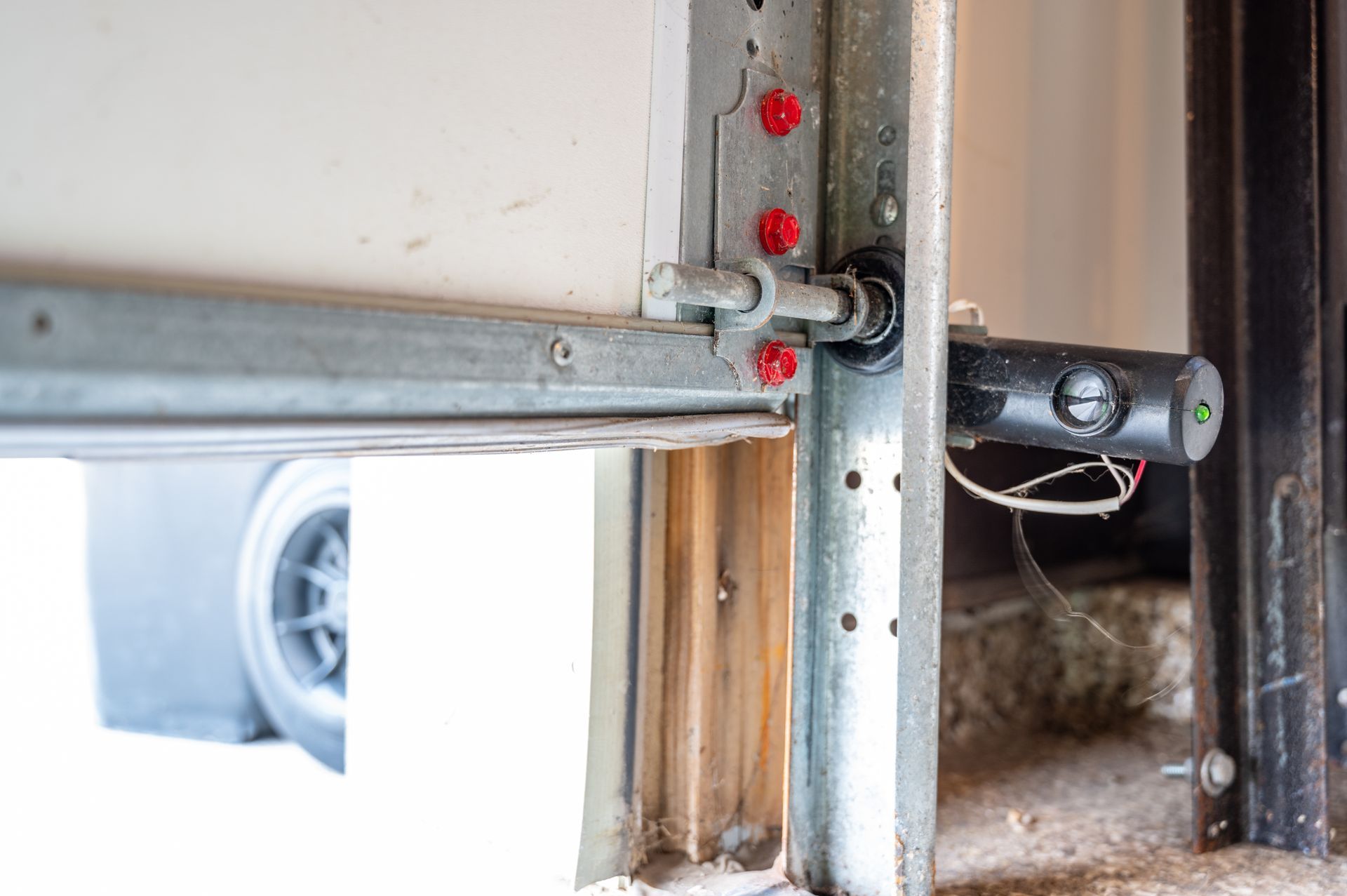
What Sensor Repair Actually Addresses
Garage door safety sensors operate as a photoelectric pair—one unit transmits a continuous infrared beam, and the other receives it. Any interruption of that beam signals the opener to reverse or halt. Misalignment as small as a quarter inch is enough to break the connection, which is why sensors that worked fine for years can start failing after something as minor as a floor sweep or a vehicle bumping the bracket. During a repair visit, bracket position, beam angle, and mounting surface condition are all evaluated, not just the sensor body itself.
After the repair is completed, the door should run through its full close cycle without reversing when the path is clear, and the indicator lights on both sensor units should display solid without flickering. A flickering light on the receiving sensor after alignment is complete typically points to a wiring issue rather than a positioning problem, which changes how the next diagnostic step is approached.
When a sensor unit itself is physically damaged—cracked housing, water intrusion into the lens, or internal component failure—replacement is more practical than attempting to repair the unit. Replacement sensors are matched to the opener's operating frequency and communication protocol, because not all sensors are interchangeable across manufacturers even when the mounting bracket dimensions appear identical.
Questions About How Sensor Repair Works
These questions address the specifics of sensor diagnosis and repair, which property owners find helpful before a service visit is scheduled.
What causes sensors to fall out of alignment if nothing has hit them?
Vibration from the door operating repeatedly over time can gradually shift the sensor bracket position, particularly when the bracket is mounted to wood framing that has experienced seasonal movement. Checking alignment periodically as part of routine door maintenance catches this before it becomes a functional failure.
How do you distinguish a wiring fault from a sensor alignment problem?
Alignment problems typically produce a steady pattern of door reversal or non-closure, while wiring faults often cause intermittent behavior—the door works on some attempts and not others. Monitoring the indicator light behavior during multiple close attempts usually reveals which condition is present before any components are disassembled.
Why does cleaning the sensor lens sometimes restore function without replacing anything?
Dust, spider webbing, and humidity residue on the lens surface can diffuse the infrared beam enough to reduce its strength below the receiver's detection threshold. Cleaning with an appropriate lens-safe material removes that interference, and if the light indicators stabilize immediately after, the lens surface was the only failure point.
What information does the sensor indicator light communicate during diagnosis?
The sending sensor typically displays a steady amber light regardless of beam status, while the receiving sensor displays green when the beam is clean and goes out or flickers when it's blocked or interrupted. Using those light states as a reference during adjustment tells the technician in real time whether repositioning is achieving the correct alignment angle.
When does sensor replacement become necessary rather than just repair?
Physical damage to the sensor housing, corrosion inside the wiring terminal, or an internal photoelectric component failure all point to replacement. In Rome, garages with block or masonry walls sometimes show water intrusion staining near the floor, and sensors mounted close to those walls can develop housing corrosion that cleaning and realignment won't resolve.
LCG Doors also performs garage door sensor repair in Calhoun, Cedartown, Cartersville, and Summerville. If your door is reversing without cause or the indicator lights are behaving inconsistently, LCG Doors can assess the full sensor circuit and identify exactly where the fault originates.